🔭“The biggest challenge in night photography? Seeing the invisible.”
You hike back to your scouted spot in the dark. You turn off your white headlamp — it destroys your night vision. You switch to red light. You wait 30 minutes for your eyes to fully adapt to the dark.
Then you put your eye to the viewfinder. And you can barely see a thing.
You shoot blind. Adjust. Shoot again. Adjust. Until the preview screen tells you the composition is roughly right.
And then you get home. You open the image at full size. And the stars — every single one of them — are soft. Not sharp. All that planning, all that cold, all that effort.
I’ve been there. More than once. Autofocus doesn’t work at night.
The infinity mark on lenses is only approximate. Stars, through a wide-angle lens, are just a few pixels — and those few pixels have to be perfectly sharp. Tired eyes, cold wind, tears from the frost — all of it works against you.
After experiencing that failure myself too many times, I spent years developing a solution. The Focus On Stars mask is the only focusing aid on the market designed specifically for astrolandscape photographers using wide-angle and ultra-wide lenses. Today it helps thousands of photographers around the world get the sharpness their lens is actually capable of.
What is the biggest challenge in photographing mountain landscapes at night that viewers may not realize?
To see and make visible the invisible.
During the day, we explore the landscape and the point from which the picture will be taken at night. We should be able to find our way back there safely in the dark.
The white beam of our headlamp only illuminates a narrow strip for us; everything else is pitch black. Not only do we have to be extra careful with every step we take, it is also easy to get lost. If we go out alone at night, we should always let those staying at home know where we’re going and how long we plan to stay.
When we arrive at the location, we turn off the white lights, which ensured that we don’t get crushed. After that, it switches to red light. Red light does not hinder the eyes’ adaptation to the dark. It is not enough for transportation, but it is enough for assembling the equipment. Thus, the eyes adapt to the dark in about 30 minutes.
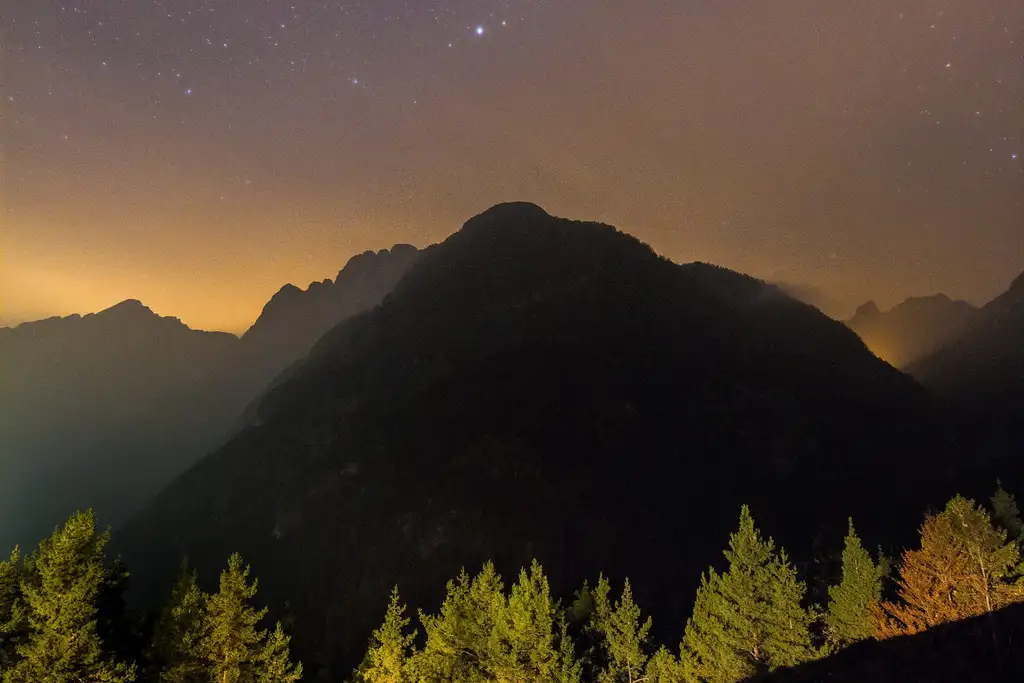
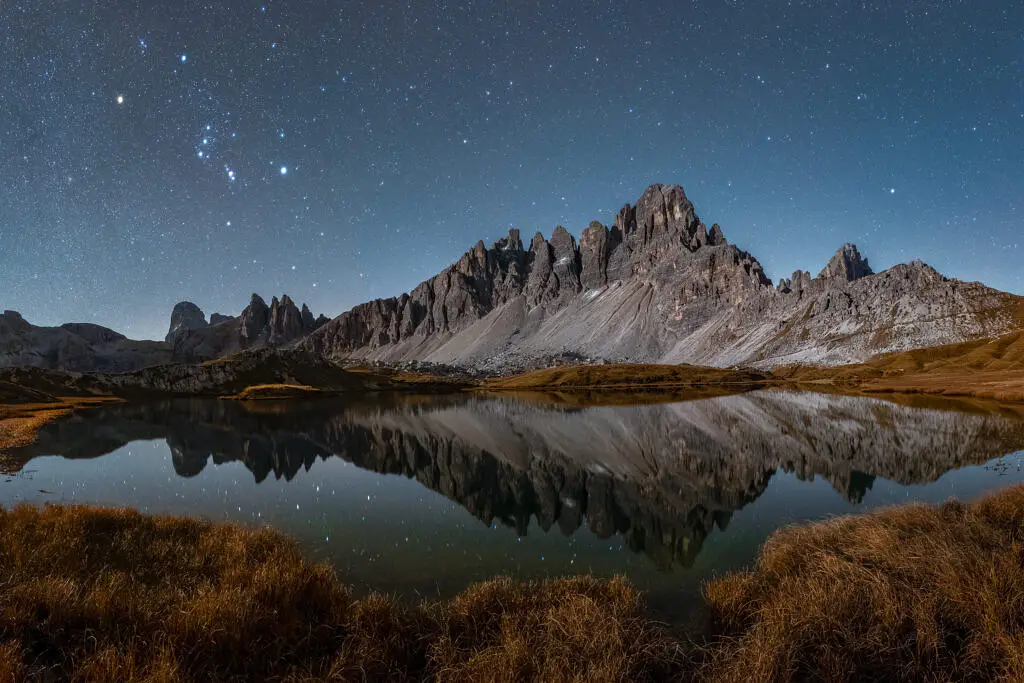
And yes, there is light at night. In the evening, the billions of stars in the sky act as the sun, illuminating the landscape, and the human eye also adapts to the dark.
Even if there is no moonlight, the stars shine. I can see the outlines of the mountains, the arc of the Milky Way — of course not in color, like the camera sensor.
Yes, but when we peer into the camera, we often don’t see any of this. In such cases, we have to randomly shoot, adjust where to take the picture, where to aim with the camera placed on a stable tripod. Shooting, adjusting, shooting, adjusting until the desired composition is achieved.
And then comes the next pitfall: precise focusing on the stars.
Autofocus does not work at night, and the infinity mark on the lenses is only approximate. The stars seen by a wide-angle lens are only a few pixels in size. These tiny points should be brought into focus precisely.
The ability to achieve precise focus is affected by the health of our vision, our momentary fatigue, the tears that have gathered in our eyes due to the cold and the wind. This can work well with a lot of practice, but even the most experienced often run into this: only at home, when looking at the image on the monitor, does it become clear that all the planning and effort was in vain — the images are soft, the stars are not sharp, but have softened.
Having experienced this failure myself several times, I developed a unique mask with a few years of work, which is currently the only one on the market that specifically provides astrolandscape photographers working with wide-angle and ultra-wide-angle lenses with the maximum sharpness that their lens is capable of.
This device now makes the lives of thousands of astrolandscape photographers around the world easier.
Available here just two clicks away. You are in the proper website now.
Investigate yourself. 🎁
All content of this series:
Global Lens Award 2025 winner interview (Travel)
Original shorter interview published in https://globallensawards.com/interview/2025/gabor-takacs/