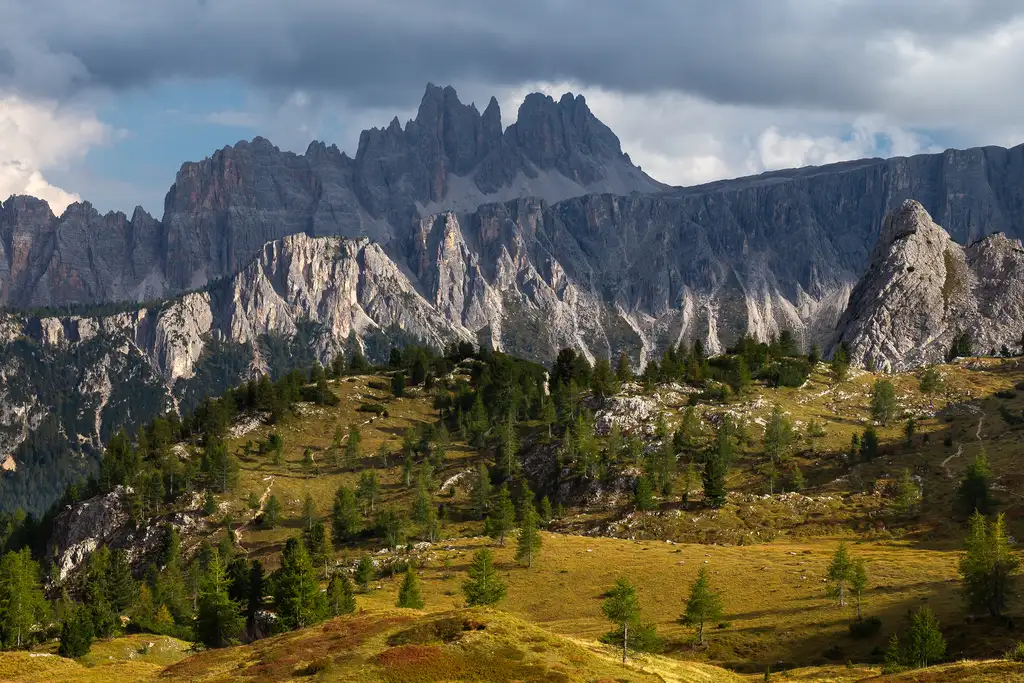
Lesson from the Dolomites
📸 “No tutorial taught me this.” I’ve planned shots that clouds erased in minutes. I’ve driven 700 kilometers from Hungary

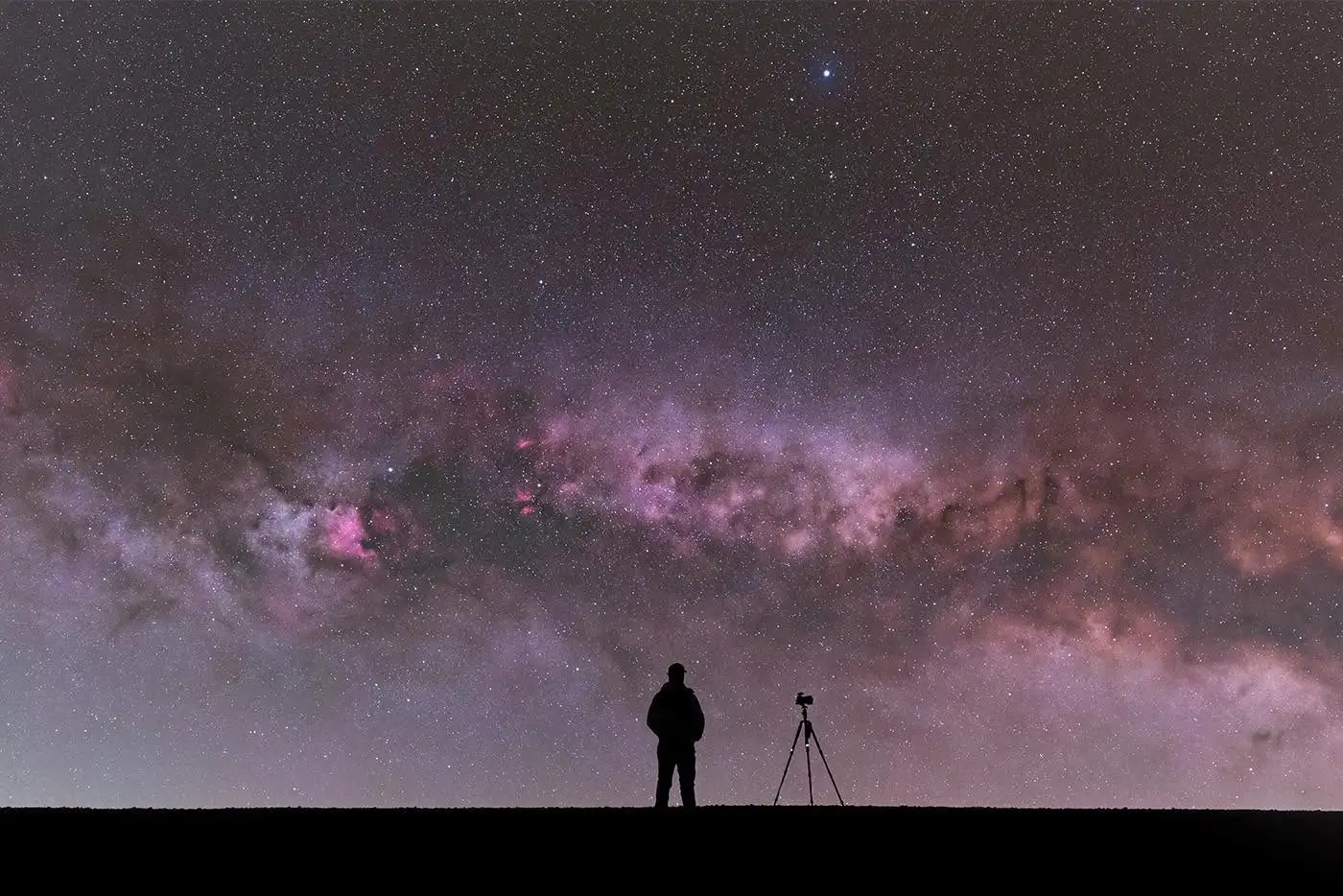
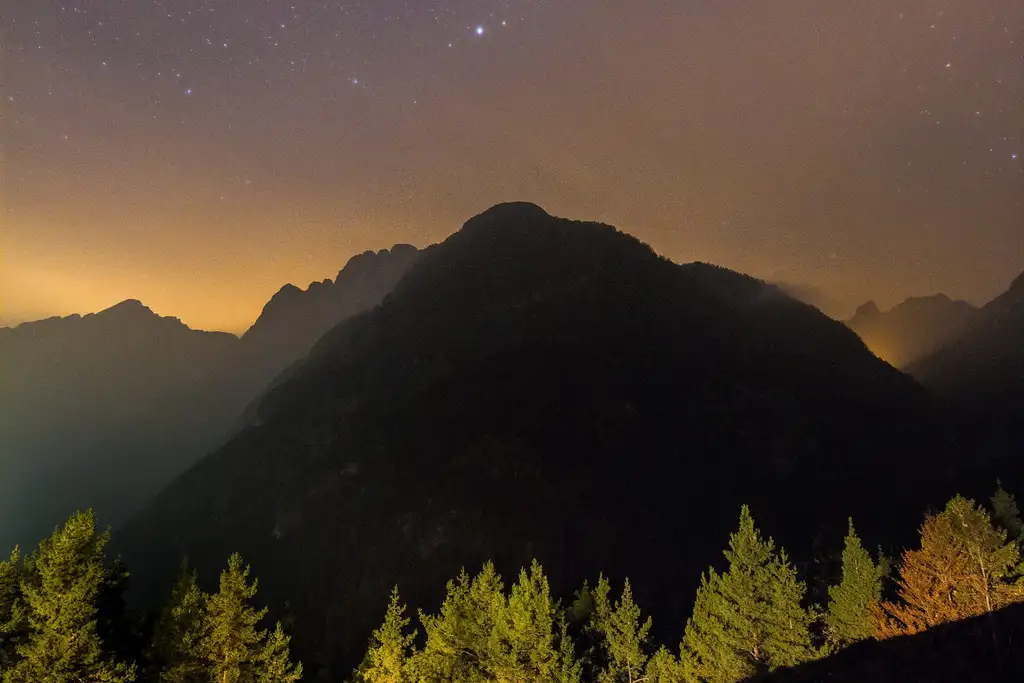
I’m certain there’s no need—and indeed, no way—to explain the feeling you get when you first see the intricate lights of the Milky Way in the vast sky above you, in a place so clear that you’re not distracted by the city’s hazy, scattered light and its dusty, misty atmospheric reflections.
It’s such a unique and unparalleled experience that it’s hard to find a simile for it.
A velvet blanket sprinkled with glitter? Or a river woven from stars stretching across the entire sky? Behind the cosmos, as if we were seeing tiny points of light through a perforated canvas, whispering to us as if we were peeking behind a curtain and catching a glimpse of the home of light?
Let’s return to Earth and the story of our friend Zoli…
Today, photography is a convenient, fast, and reliable technique. You’re walking through a beautiful autumn forest, you spot an interesting light, and you snap a photo. You pull out your phone, take a picture, and see it right away on the screen. You’ve captured the moment. Technology is completely at your service. And you’re in control of your surroundings.
But in the world of astrophotography, this convenient reality crumbles like a house of cards. Photography and astrophotography share only a tiny fraction in common—nothing else. It’s no exaggeration to say that even the camera itself is different, let alone its settings! But let’s not get ahead of ourselves—let’s start at the beginning.
Reporter: How did you stumble upon—or discover—the genre of night photography?
Zoli: I’ve been taking photos since 2015—seriously, that is. I took photos with a film camera when I was a kid, but with little success—I didn’t think my pictures turned out well. In fact, there were times when I couldn’t even load the film properly, and not a single photo came out right on vacation. There were setbacks at first, but then, when I was a teenager, those compact cameras came out, and they were really great.
The Fuji was pretty much a compromise, because the images were very noisy at ISO 400, and at ISO 800, it was simply unusable, especially at night. Then, back in 2015, I saw my friend Zoli Szabó’s camera, and I said, “Wow, I need a camera like that…”
The “Hard Core” and Exploring the City at Night
Zoli: That’s where I met Gyula Lóki, my friend Gyula, and they were already taking photos with Robi Krémer and my friend Jani Hőbír—they were actually macro photographers, specifically nature photographers—and they started photographing the city, and one day they invited me to go mushroom photography with them. So I went with them, and they decided to let me join the inner circle—so I was definitely part of the inner circle at that point.
Gábor: And were there any photos taken back then?
Zoli: We had our own Messenger group (the inner circle of the core group), and they were already having an exhibition at the city’s cultural center at that time, and man, I was so proud of myself for being part of such a core group…
Zoli: And Gyula and I started exploring the city: we took photos at night from the Mecsek hillside, starting from the Nike statue, walking up along Édesanyák út to the children’s hospital. For example, we’d set up the tripod on the ground and take long-exposure shots—those light-trailing and streaking effects—even up at the Hotel Kikelet at night. So that’s how we got into evening photography, and back then I hadn’t started shooting stars yet—I hadn’t even taken any photos of the Milky Way yet.
Zoli: And then in 2015—or maybe it was already 2016—Zoli Szabó, who introduced me to the world of Nikon, said that in August—of course, that’s when shooting stars are visible—I didn’t even know such a thing existed back then, so I wasn’t sure if I should go with them to photograph shooting stars. So we went out to the Magyarhertelend lookout tower—the tower itself served as our base. We set up our gear—there were three of us guys and a girl we knew—but it was completely cloudy; not a single star, nothing at all. Well, as I said, we blew it—that was the end of my first astrophotography experience, and I ended up with a bunch of cloudy photos…
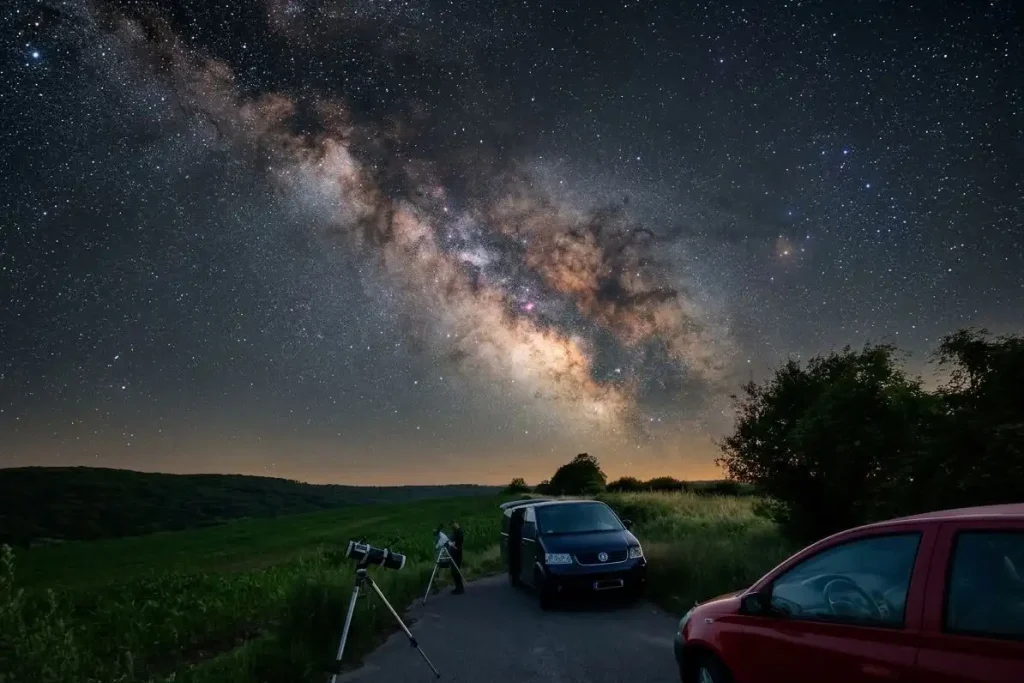
Zoli: We drove down to the Zselic Star Park, a field nestled among the dark forests in the hills near Kaposvár, far from any big-city lights. I got out of the car at the lookout point because it was dark, you know. I looked up, and there it was—the starlit crystal palace in the sky! And from that moment on, I couldn’t stop thinking about seeing that miracle again.
Reporter: So you first saw with your own eyes something you hadn’t even imagined. In a place free of light pollution, that must have been an amazing experience.
Zoli: I grew up in the countryside, by the Danube, in Kölked, and I remember as a kid lying out in the backyard all summer long, on top of the woodpile. And Kölked is a really dark place south of Mohács—there’s nothing there. And I remember that the sky was absolutely full of stars, but as a kid, I didn’t really notice it—I didn’t think, “Oh my God, look at all those stars shining up there!”
And that’s how it all came together—I realized that this was what I needed. And from then on, I started going to Zselic…
All content of this series:
“The School of Darkness” – How to become an astrophotographer?

📸 “No tutorial taught me this.” I’ve planned shots that clouds erased in minutes. I’ve driven 700 kilometers from Hungary
🌌“Every night landscape holds an eternity.” The mountain in front of me is the present. The sky behind it is
🔭“The biggest challenge in night photography? Seeing the invisible.” You hike back to your scouted spot in the dark. You